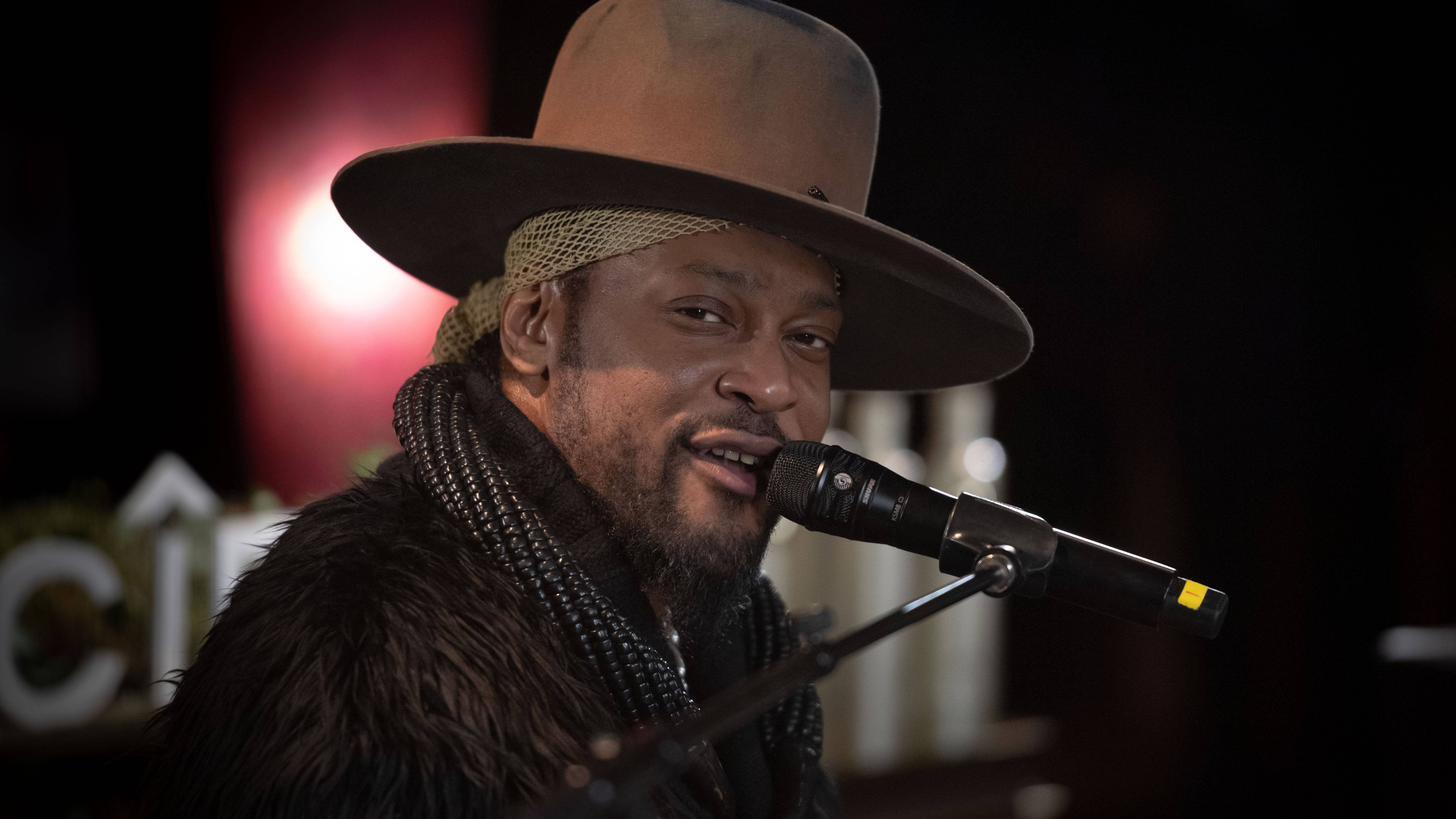
14 October 2025. A quiet, slow-moving rainy morning in Los Angeles.
I’m sitting on the same couch as I was on another quiet, slow-moving morning in Oakland, 21 April 2016.
This feels like that.
The disbelief. The dread. The heartache for someone I never knew in real life, but whose music lifted and shaped and formed significant eras of my everydays.
Just as I strained to process the news that Prince had died on that Thursday morning nearly a decade ago, I’m simply not able to accept that our dearly beloved brother in soul, Michael Eugene Archer, globally known has D’Angelo, has left us to join the ancestors.
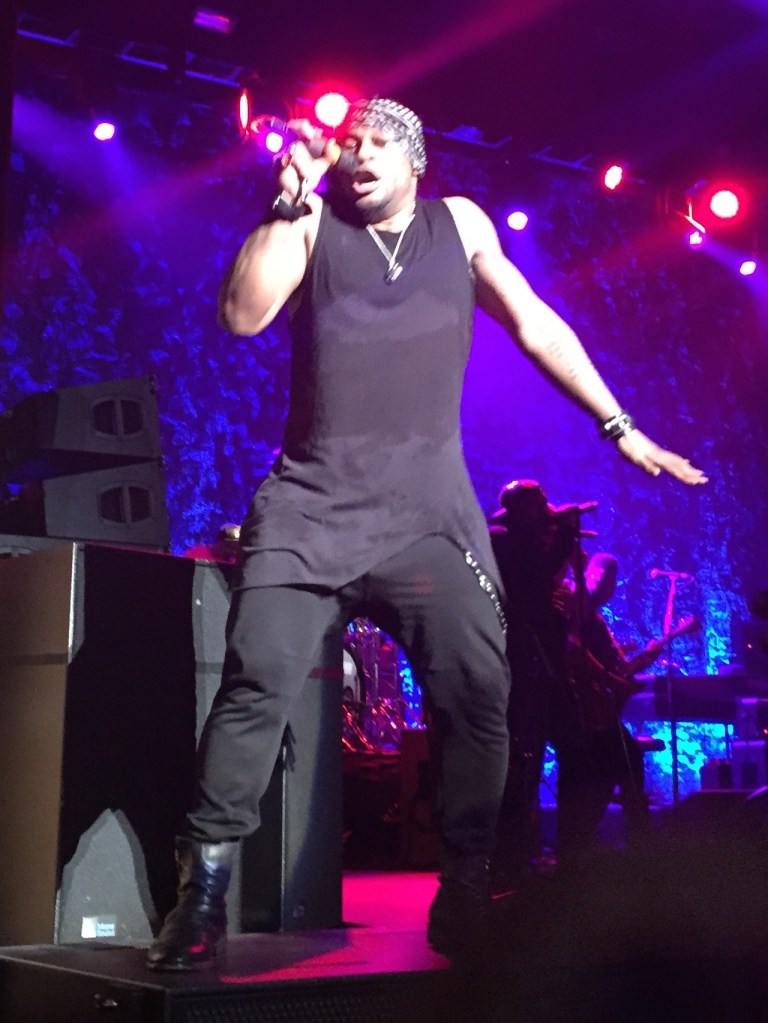
Do you remember where you were the first time you heard D’Angelo’s breakout single, “Brown Sugar?” I was in college, and the song was possibly the most iconic jam of that summer’s soundtrack. The neo-soul movement was in its infancy but already making considerable noise with projects by Zhané, Dionne Farris, Joi, and Groove Theory introducing new experiences in R&B, soul, and hip-hop. With sensibilities steeped in the Black church tradition and rooted in blues, soul, funk, and jazz, D’Angelo’s contributions to this burgeoning genre are foundational, and undeniably so.
We all thought “Brown Sugar” was about loving Black women, and we walked a little taller with a touch more sway in our hips hearing this gorgeous brotha with the slight curl in his lip croon about this girl he met in Philly as he took a drag from his cigarette. Even after we learned the song’s true meaning(s), his lyrical choices and the intimacy expressed over a groove that was simultaneously slippery and tight kept us locked in. Brown Sugar was the gateway to devotional Blackness in the mid-1990s, delivered to us by an artist we’d soon come to regard as one of our most gifted and influential.
And then, there was the conjuring.
Voodoo unlocked something deeper, something seemingly guided by those who’d come before. A monumental feat of composition, production, and performance, with his second album D’Angelo welcomed us into the new millennium with the simple question, “how does it feel?” As Voodoo‘s lead single, “Untitled (How Does It Feel?)” marked a pivotal tipping point in D’Angelo’s career. A sparse, sultry R&B slow jam that fit perfectly on a mixtape with the likes of Prince’s “Adore” and the Isley Brothers’ “Between the Sheets,” “Untitled…” pulled back the curtain on the seeds of sensuality planted on Brown Sugar. On both the song and literally in the music video, “Untitled…” found D’Angelo stripped down, bare. Vulnerable. Without pretense. In a sense, it was perhaps the first time we were seeing him.
With tracks like “Devil’s Pie” and “Chicken Grease,” D’Angelo stood out as one of the few newer artists delivering funk for the 21st century. In his music, we hear James Brown and P-Funk and The Ohio Players. We understand that his musical tutelage blended the grime of Saturday night with the enlightenment of Sunday morning. Through his work, those who may have forgotten who run this shit were reminded over and over again that rock–like funk, soul, jazz, gospel, blues, R&B, and hip-hop–is our birthright. And just as he’d done with his modern take on Smokey Robinson and The Miracles‘ classic “Cruisin'” on Brown Sugar, he continued to pay tribute to our living legends on Voodoo with his luscious cover of Roberta Flack‘s “Feel Like Makin’ Love.”
I got to see D and his band, the Soultronics, when the Voodoo Tour made its way to Dallas in 2000. It’s wild to remember now that it was at that show that I first experienced Questlove, Anthony Hamilton, and Shelby J., all of whom would quickly go on to have phenomenal careers. I remember being mesmerized by the energy on stage. My music career had hardly begun at that time, but I soaked it all in.
But there was a price, personal and professional, and as Voodoo faded into the background so did D’Angelo.
And as we too often do as a culture, as a society, we allowed the rumors spun from realities most of us had no actual insights into to fuel the jokes, commentaries, and think pieces that would populate the airwaves and the digital spaces coming to life before our eyes. Everybody had something to say, too frequently mean, insensitive, and not all that clever at D’Angelo’s expense.
In the intervening years, he popped up here and there, making a rare appearance every now and again for good reason. One of those reasons I was blessed to be present for was the Prince tribute at Carnegie Hall in 2013. The Music of Prince featured a stellar line-up that included legends such as Elvis Costello and Booker T. Jones, unexpected surprises like SNL‘s Fred Armisen, and Maya Rudolph with Gretchen Lieberum as their Prince tribute duo Princess, and artists from deep within the purple universe–The Revolution‘s Wendy Melvoin, and St. Paul Peterson, Susannah Melvoin, Eric Leeds, and Jellybean Johnson from one of Prince’s dopest projects, The Family (now known as fDeluxe). D joined Wendy, The Family, and others to close out the show with Prince’s “It’s Gonna Be a Beautiful Night.” And it was. It absolutely was.
BET Awards weekend 2012.
Somehow I got wind that D and his new band, The Vanguard, were doing a set at the House of Blues on the Sunset Strip. And somehow, I got myself a ticket. The venue was packed and the pre-show music was all Prince and Prince-related artists. This was the first time I witnessed the glory that is Jesse Johnson, formerly of The Time, as part of D’Angelo’s touring band. On this summer night in LA, all of us blessed souls crammed into the HOB got our first taste of what would be his next album, Black Messiah. Virtually the entire setlist that night was new music we’d never heard, with only one or two joints from his previous albums sprinkled in. Fairly certain he played a little bit of “Untitled…” but honestly, I don’t remember. What I do remember was watching Kendra Foster kill it during “Really Love.”
He opened up the BET Awards the next night to mixed reviews, once again offering newer fare instead of serving up the hits we’d already heard a million times before. Not that there was anything wrong, then or now, with those older songs; but D’Angelo knew, like so many artists, that he needed to feed his audience more than what we knew we liked. He was there to nourish us with something more, one mo’ ‘gin.
15 December 2014.
I was in San Antonio visiting my dad and stepmom for the holidays. Earlier that day (or maybe the day before…what is time?) there’d been rumblings of a new D’Angelo single set to drop within hours. It did, and I hurriedly listened to “Sugah Daddy” while getting ready to go to church with my daddy, the preacher, so I could get something written up for SoulTrain.com before the end of the day.
Then came word that an entire album was coming–WITHIN HOURS! That night, I stayed up late like a kid on Christmas Eve waiting for Santa. Just after midnight, I hit play. Careful not to be too loud, lest I wake the household, I sat up in the bed, in the dark, focused intently on what was coming out of my phone. I kept thinking, ‘This album is so Black.’ There was just something about it, something else, that was out front and also pulsating defiantly beneath the surface. Texting with some of my music nerds, we all agreed and seemed to be feeling the same feels in just that first listen. It was euphoric.
I was disappointed in the days that followed to see so many people whose perspectives on music and culture I trust(ed) opine about the album, about how “different” it was from Brown Sugar and Voodoo, how they couldn’t relate or couldn’t understand what he was saying (despite there having been an entire website with the lyrics that accompanied the album’s release). With the memories of Trayvon Martin and Michael Brown, young Black men whose lives were cut short by a self-appointed racist vigilante’s and a law enforcement officer’s bullets, respectively, and anti-police brutality protests in Ferguson, MO still visible in our collective rearview, Black Messiah arrived with cover art featuring a sea of fists raised in power captured at AfroPunk, and with an urgency that spoke directly to the inflection point on which we were teetering.
The music landscape had morphed into a nearly unrecognizable shell of itself in the decade and a half since his last studio album. The height of the neo-soul era had long ago ended, and while so many of the artists from its heyday (Badu, India.Arie, Maxwell, Bilal, Jill Scott, The Roots, and countless others) had maintained their place in the spotlight and issued career-defining work throughout the years, it’s as though some people preferred a version of D’Angelo that no longer existed.
He’d shed a few skins on the way to his Second Coming, and for those who stayed on the path with him, long and winding and uncertain though it may have been across that stretch of time, we were ultimately rewarded with his miraculous, triumphant return. His live performances with The Vanguard were electric. D’Angelo stepped onto the stage with what felt like renewed purpose, a self-possession that didn’t require him to don personae or sartorial statements no longer befitting the man and the artist he’d become.
I suppose perhaps the last time I saw D’Angelo perform was his heart-stopping moment on The Tonight Show with Jimmy Fallon, when he and Princess performed Prince and The Revolution’s “Sometimes It Snows in April” following Prince’s devastating death. Prince always talked about how “time is a trick,” and in an odd way it doesn’t seem like it’s, once again, been so long since something so significant occurred.
D’Angelo was supposed to release at least one, if not two, more albums following Black Messiah. For awhile, there’d be rumors and whispers of movement in the studio. In 2018, he released the single “Unshaken” as part of the Red Redemption 2 video game. And last year’s cinematic adventure, The Book of Clarence, included the track “I Want You Forever” with filmmaker Jeymes Samuel and Jay-Z.
We don’t want to be without you, D.
There aren’t enough words to properly express the grief I feel, that so many probably feel, too.
And there truly aren’t enough words to adequately offer the gratitude you’re due for the gifts you shared with us. “Thank you” just doesn’t do justice, but it will have to suffice.
“In another life” you are now, living on in bass lines, in 13ths, in dominant 7ths…In stacked vocals, in complex harmonies and gorgeous melodies, in broken guitar strings and studios littered with dreams and fragments of a verse or chorus, and in the grace and grit of Black music forever more.
Rest in all that is soulful, dearest D’Angelo.
Discover more from Rhonda Nicole
Subscribe to get the latest posts sent to your email.
