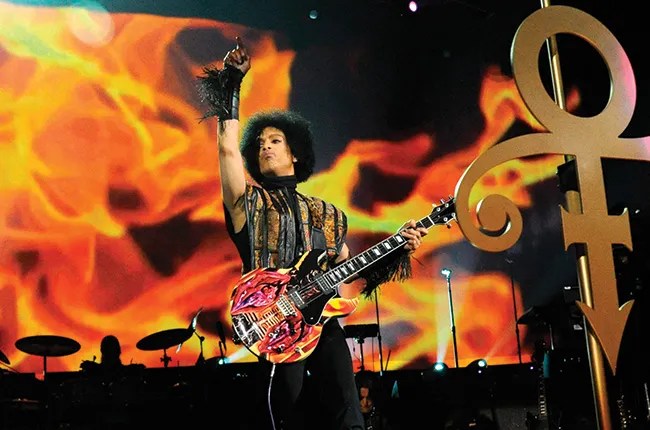
21 April 2016.
In the first hours after news broke that Prince had died at Paisley Park, his legendary creative sanctuary in Chanhassen, MN, I penned this piece to try to organize my thoughts in the midst of chaos and disorder.
21 April 2026.
Ten years on, I’m sitting on the same couch in my cousins’ home as I was a decade ago. Back then, we were in Oakland; now, we’re in LA. Back then, I was just days away from loading up my car to move from the Bay to Vegas for a new job in corporate social media with MGM Resorts. Today, it’s been almost 2 years since my last full-time role, and I’m struggling to figure out what direction to take now with my career. This time in 2016, I was a couple years removed from what had been a fun but relatively short-lived stint singing background for a local dance/funk band. A decade past, I’ve released three more self-produced EPs since my debut project in 2010, a string of self-produced singles, featured on my music partner Montrose Cunningham‘s latest single, and scored my first-ever co-write with rising singer and actor CamRus.
So much has changed in this last decade, but one thing remains the same: Prince’s music is still as much the soundtrack of my life as it’s been since 1984, my year of initiation in the figurative waters of Lake Minnetonka.
Ten years ago, the venerable SoulTrain.com, where I’d been managing editor since 2011, abruptly shut down without notice just days before Prince’s unexpected passing. On April 4, 2016, we (my fellow Soul Train writers and I) awoke to a tweet announcing that BET had acquired the brand, and it was clear that this once vibrant platform celebrating Black music past, present, and future would be no more. One of my final pieces published on the site was my review of Prince’s second Oakland Piano and a Microphone show. As the site’s editor, I was so proud of the reverence and tenderness with which the writers would memorialize the heroes who’d transitioned; just in the early months of 2016, we lost the icon, David Bowie; Earth, Wind & Fire co-founder and front man (and could’ve-been producer for Prince’s debut album if the label had had its way) Maurice White; singer, model, and actress Denise Matthews, formerly known as Vanity and a prominent collaborator and muse in Prince’s universe; A Tribe Called Quest’s Phife Dawg (née Malik Izaak Taylor); and in the months after Prince, “Me & Mrs. Jones” crooner Billy Paul, Parliament-Funkadelic keyboard maestro and producer Bernie Worrell, singer/songwriter and mega-producer Kashif, the incomparable Rod Temperton, and greats such as Leonard Cohen, Leon Russell, Sharon Jones, and George Michael rounding out the year. We’d have covered all of these losses on the site, but on April 21, 2016, our text exchanges were aflame with musings about multi-media explorations of Prince’s life and music and our collective disappointment that such an important platform for Black culture was no longer a viable space to celebrate one of the most influential artists of all time.
These seismic cultural losses, coupled with the results of the 2016 U.S. presidential election that opened the doors of the White House to an administration many knew would do more harm than good, made for a challenging year. With every death of a beloved artist or public figure or unhinged action from the country’s political “leadership,” 2016 seemed to dip us further into the upside down…just in time for the series premiere of Stranger Things (Netflix).
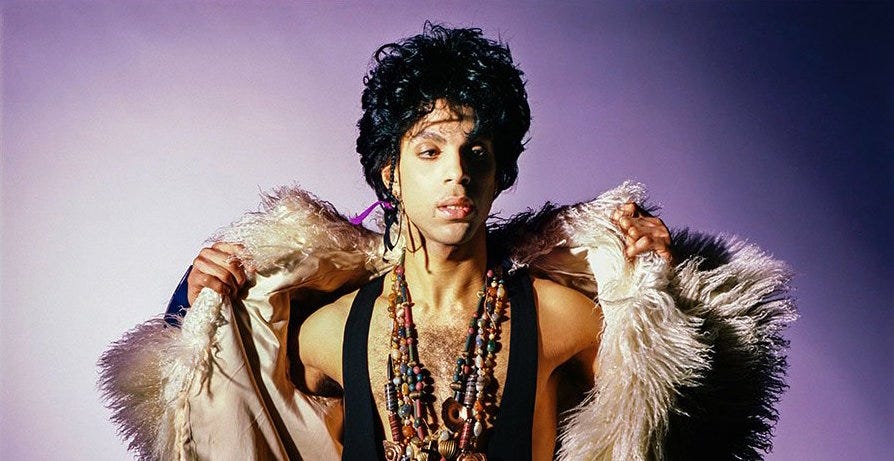
In October 2016, I was one of thousands to descend upon Minneapolis for the Official Prince Tribute: A Celebration of Life and Music at St. Paul’s Xcel Energy Center. With performances featuring Chaka Khan, Stevie Wonder, the New Power Generation, Mayte, Morris Day, and more, the show seemed to last forever. I danced (in my seat, in the aisle, and on stage with the NPG), sang at the top of my lungs, wailed; hugged strangers and offered and received comfort from people whose names I didn’t need to know. We were united in our grief even as we celebrated the music that made us feel alive and connected. I visited Paisley Park for the first time, where I cried harder than I had in a long time, holding both my dad who’d died just a month before and Prince in my heart as I toured the storied, hallowed halls of his complex. By then, they’d concealed the elevator where Prince had inhaled and exhaled his final breaths. I’ve never cared to know where it was; knowing that it was, was enough. Through the tears, I sang–something I’d always dreamed I do there with Prince but never got the chance…at least not in the way I’d hoped.
Not long after the tribute concert, I had one of the first dreams about Prince since his passing. I was onstage at the tribute show, sitting in a chair. Prince was wearing a white suit and he seemed to be illuminated. He told me I should play more funk. In another dream during that time, he’d summoned me to Paisley Park. I walked into a studio and there he was, in all white, with his back to me. He reached around and handed me a cassette tape and told me to write my vocal parts then bring the tape back to him. There were a few other dreams, all involving some kind of musical instruction. I listened, and I absolutely believe on some level that those “visits” helped me unlock a part of my creative brain and release more of my music.
At the closing of the year, I had the incredible fortune to ring in 2017 at a NYE house party hosted by Prince’s Purple Rain and Graffiti Bridge co-star and longtime collaborator Jill Jones and one of his former love interests, Anna Fantastic. I’d interviewed Jill for my Soul Train Artist to Artist column in early February 2016, days before Denise’s passing. As one of my favorite artists on the Paisley Park label, it was a bonafide dream come true to finally meet Jill in person. Shortly before midnight, Jill invited all who desired to do so to scribble down on a piece of paper anything we wanted to leave behind in what had been a particularly tumultuous year. We gathered outside and ruminated about Prince, and then carefully burned our folded scribbles to symbolize the removal of all that we refused to carry into the new year. We watched Mariah Carey countdown to the ball drop in Times Square, then queued up “1999” on karaoke and sang for the gawds.
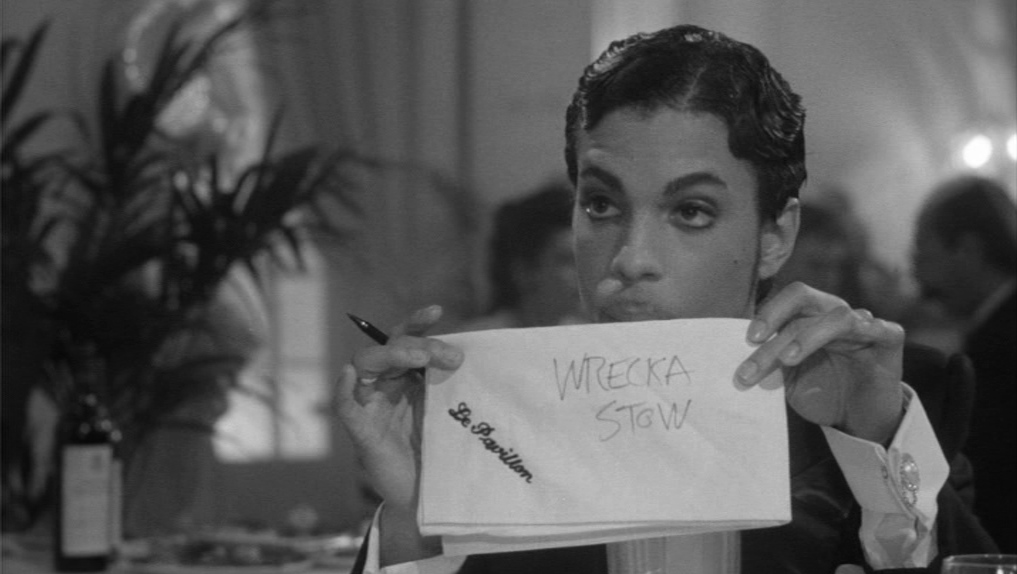
What’s perhaps been the most thrilling and surprising development over the past decade is how Prince’s global “fam” (fan) community has evolved, and the space I’ve found for myself within it. While his estate has hosted the annual Celebration events every year since 2017 (with the exception of 2020 and 2021 due to COVID), released an impressive but certainly not exhaustive slate of re-releases, deluxe box sets, and wreckastow day exclusives, and licensed his music for everything from commercials to TV series to a possibly Broadway-bound musical production of Purple Rain, it’s the unwavering devotion of his most diehard supporters that’s done the heaviest lifting to keep him front, center, and top of mind. Nowhere is that more evident than in the scholarly explorations of Prince’s music and cultural impact, led in large part by fams who, in many cases, also happen to be musicologists, historians, academics, musicians, and music journalists.
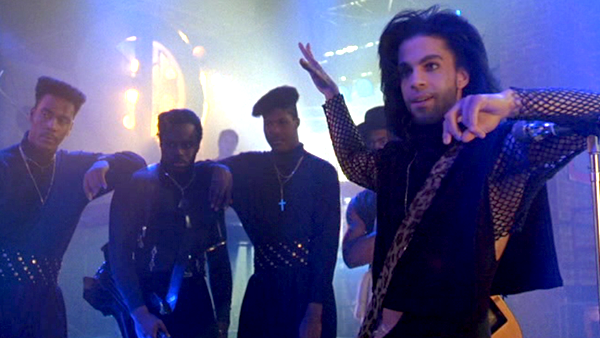
NYU professor and Prince scholar De Angela Duff began curating her symposia with the express mission of preserving Prince’s legacy. Beginning with her #Lovesexy30 event in 2018 through this past weekend’s #IWonderU40 symposium celebrating 40 years of Parade and Under the Cherry Moon, Prof. Duff has assembled an enviable cadre of Prince scholars who gleefully nerd out about every conceivable facet of the album and the era–from track by track analyses to full album breakdowns, deconstructing fashions and fonts, tackling the sociopolitical urgencies of the time, and peeling back the curtain on faith, spirituality, and philosophy, the brilliant minds who present at these symposia leave “no turn unstoned,” to borrow a phrase from De Angela’s radio show. I’ve had the pleasure of taking part in a handful of her symposia as a presenter, a panelist, and a slightly over-stimulated fan in the audience. And just to keep her foot all the way on the gas, she’s been hosting a weekly podcast, What Did Prince Do This Week?, every Saturday for the past 4 years, engaging a slow week by week read of Prince historian Duane Tudahl‘s books, Prince and the Purple Rain Era Studio Sessions: 1983 and 1984 and Prince and the Parade and Sign O’ the Times Era Studio Sessions: 1984 and 1986.
Back before the social media platform formerly known as Twitter met its demise, a lively and vocal digital Prince community thrived there. With Twitter’s instant gratification algorithm that allowed real-time reaction and response to any number of topics, it was, for may years, the social app of choice for brainy Prince fams to fire off everything from lofty musings to scorched earth critiques of the estate, especially when a music release had been announced or would soon arrive. It was an especially fertile space for international, intergenerational fams to connect and share their love and admiration for our fave. Two fams based in the EU, DJ UMB and Edgar Kruize, had the vision to leverage Twitter’s new (at the time) threading feature and created a series called Prince Twitter Threads. The concept: Select an album, curate a roster of fams active on Twitter to dissect the album song by song, then roll out the series. After witnessing a couple of these incredible Twitter events, I slid into UMB’s DMs to ask if he’d consider me for one sometime. I wound up contributing to several Prince Twitter Threads events, waxing poetic about the Sign O’ the Times Super Deluxe (“Play in the Sunshine” and “Forever in My Life (Early Version)”), 1999‘s “Let’s Pretend We’re Married,” The Family’s “The Screams of Passion,” Jill Jones’ “Mia Bocca,” and The Gold Experience‘s “Gold.” The series probably still exist on the platform, but since I no longer hang out over there I’m not inclined to go chasing waterfalls.
Continuing with the scholarly discourse around Prince’s music, the International Centre 4 Prince Studies emerged in more recent years to offer diverse perspectives on Prince’s music and cultural impact. Founded by Kirsty Fairclough, Ph.D., Kristen Zschomler, M.A., Crystal Wise, Ph.D., Casci Ritchie, Ph.D., Chris Johnson (Purple Knights Podcast), and Mike Alleyne, Ph.D., the IC4PS hosts its conferences at the University of Minnesota and attracts interdisciplinary Prince scholars from across the globe. Presenting my paper “Prince on Screen: The Audacity of Resistance, Liberation, Joy, and Sex” at their 2023 conference was definitely a highlight of that year. This year’s conference takes place June 1-2, just before Celebration. I’ll be presenting a paper on fandom and legacy.
The Prince fam community effervesces with creativity, and it’s no secret how much he continues to inspire us in our day to day lives. The number of books, podcasts, limited video series, albums and EPs, paintings, and other works that have come out of this community since Prince’s death is nothing short of breathtaking. I became enamored with visual artist Troy Gua‘s Le Petit Prince (LPP) series in the early 2010s, even interviewing him for my Soul Train column. Marco ‘t Hart‘s 9T99Art prints and books, Heart and Starr‘s gorgeous enamel pins, Martin Homent’s brilliant designs (some of which Prince commissioned for official album artwork), and Clémentine, aka, Blule‘s, delicate Prince watercolor paintings are but a few of the expressions of artistry coming out of this beautiful community. Michael Dean, Jason Breininger, Casey Rain, and Richard Cole are but a few of the fams who’ve parlayed their love of Prince’s music into some of the most insightful deep dives and conversations you’d ever want to hear on a podcast. I know there are so many others, and as Gen Z’ers continue their journey into his discography I know there will be more.
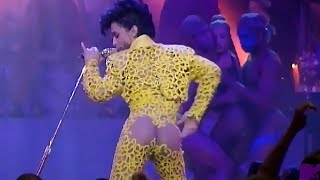
Since moving here to Los Angeles from Vegas in 2018, I’ve locked in with a magnificent crew of fams who bring the camaraderie we’ve cultivated online into real life spaces. The infamous BumpSquad, a group of fams who’ve been building and deepening friendships borne of a love for all things Prince for more than 25 years, continues to grow and make room for newcomers. Dr. Funkenberry, who became one of Prince’s most valued liaisons to his fams, remains a respected and revered resource here in Los Angeles and beyond. The LA Prince community shows up and shows out, filling the early and late St. Paul and the MPLS Funk All-Star shows at Vibrato on a weekday night; dancing the night away on a rooftop in Koreatown for the annual Princeology party; fighting for parking in DTLA so we can watch Under the Cherry Moon with co-star Jerome Benton; and selling out Mayte‘s Live 4 Love Charities gala. This network is so much more than a fan club: It’s a lifeline that not only keeps us all connected to the music we love, but also to one another. In recent years when members of the community have experienced hardships and serious illness, fams have rallied to support, love on, and care for our brothers and sisters in purple funk.
It’s a testament to Prince’s life, music, and legacy that 10 years after he slipped just beyond our sight, the people whose lives he touched with his otherworldly gifts keep his name and his sound lifted. We continue to bond over the snare hits, guitar licks, and bass thumps he treated us to over the course of his nearly 40-year career. His absence is still too heavy. And yet, his presence in undeniable. When D’Angelo died in late 2025, it felt all too familiar as yet another one of our musical giants had been felled by the inevitable. We mourned his passing and compared it to how it felt losing Prince–not exactly the same, but still a weight we knew more intimately than we’d prefer…a kindred feeling of immense sadness and grief for a song faded too quickly.
On this day, the 10th anniversary of Prince’s death, my heart still aches for the artist who is my greatest inspiration and the reason I decided to follow my musical dreams. But instead of wallowing in sorrow, I want to celebrate him the way I believe he’d want us to: With the music loud, “all a share together now,” laughing and singing and dancing and clapping on the 2 and 4, “white, Black, Puerto Rican, everybody just-a freakin’.” There’s always room for “tears go here,” but there’s joy to unearth anew with every listen, every click of the play button.
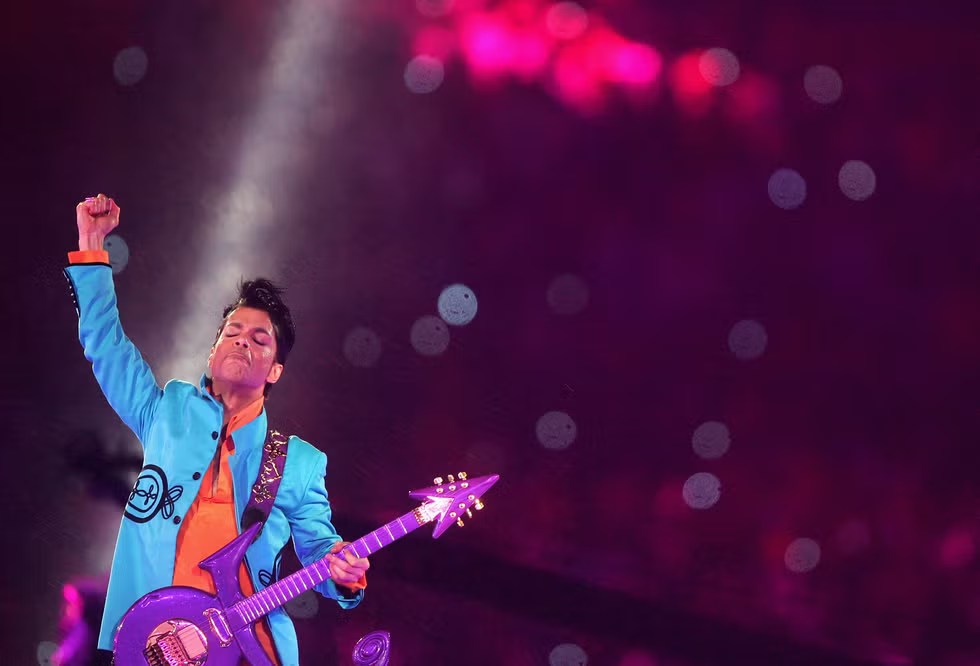
In May 2016, I penned a song called “Thursday Mourning” as my own tribute to Prince. The last verse says: “You said there’s April snow sometimes, my baby/and love’ll conquer if we just believe/Life is just a party, ain’t it, baby?/Through the tears we are glad that you are free…” Paraphrasing his own words that seemed to guide so many of us throughout our lives, I was reminded in writing this song of the power of love, and music, and the human heart.
Music is still the tie the binds. 4Ever.
Discover more from Rhonda Nicole
Subscribe to get the latest posts sent to your email.
